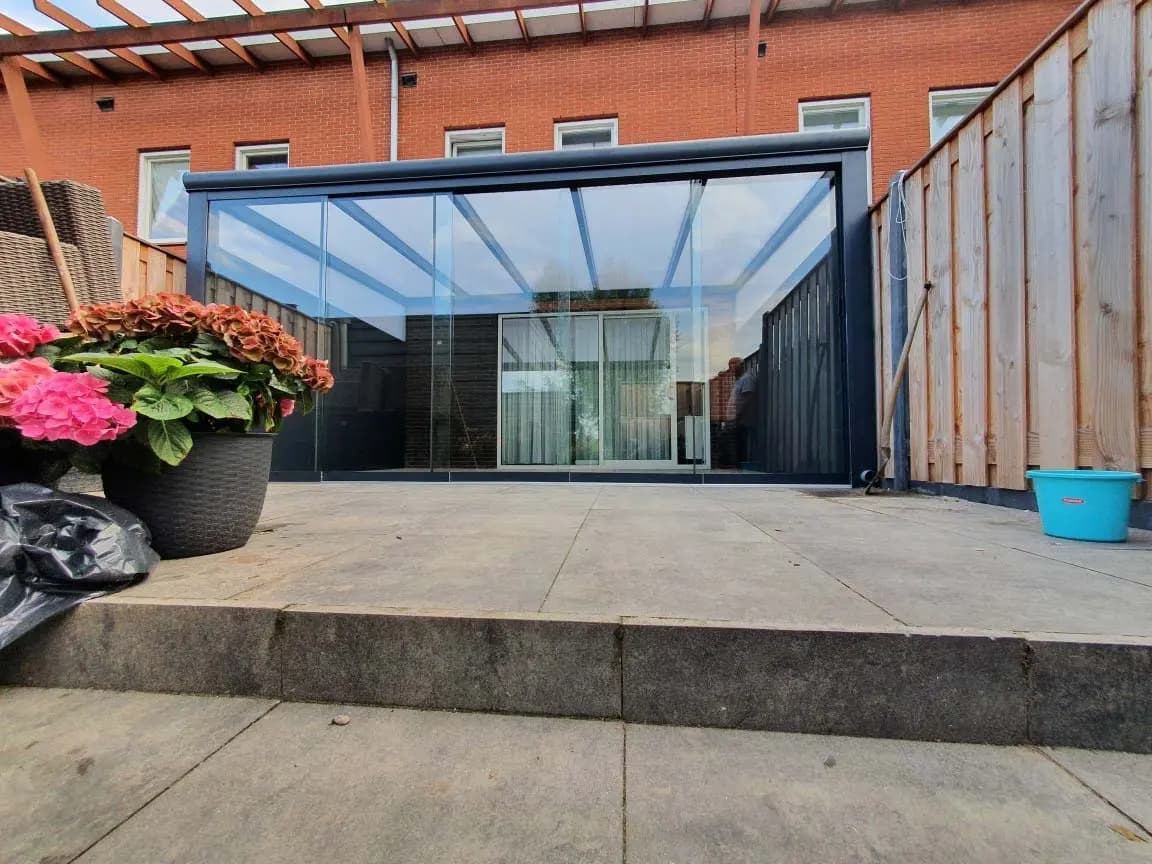
Glass or polycarbonate?
The roof decides how your veranda feels: how bright it is, how warm it gets and how the rain sounds. A sober comparison of the two materials.
- By GardenGate Veranda
- Published 3 October 2026
- 6 min read
Short answer
- Glass usually lets in the most light, gives a clear view of the sky and is quieter in rain. It is heavier and generally more expensive.
- Polycarbonate is lighter and more affordable and usually insulates better. The light is softer, and you hear rain more.
- Which suits best depends on the position of your garden and how you use the veranda. Describe both with your request and we will think along with you.
Two kinds of roof
A veranda usually gets a roof of glass or of polycarbonate. Both let daylight in, but in different ways.
Polycarbonate
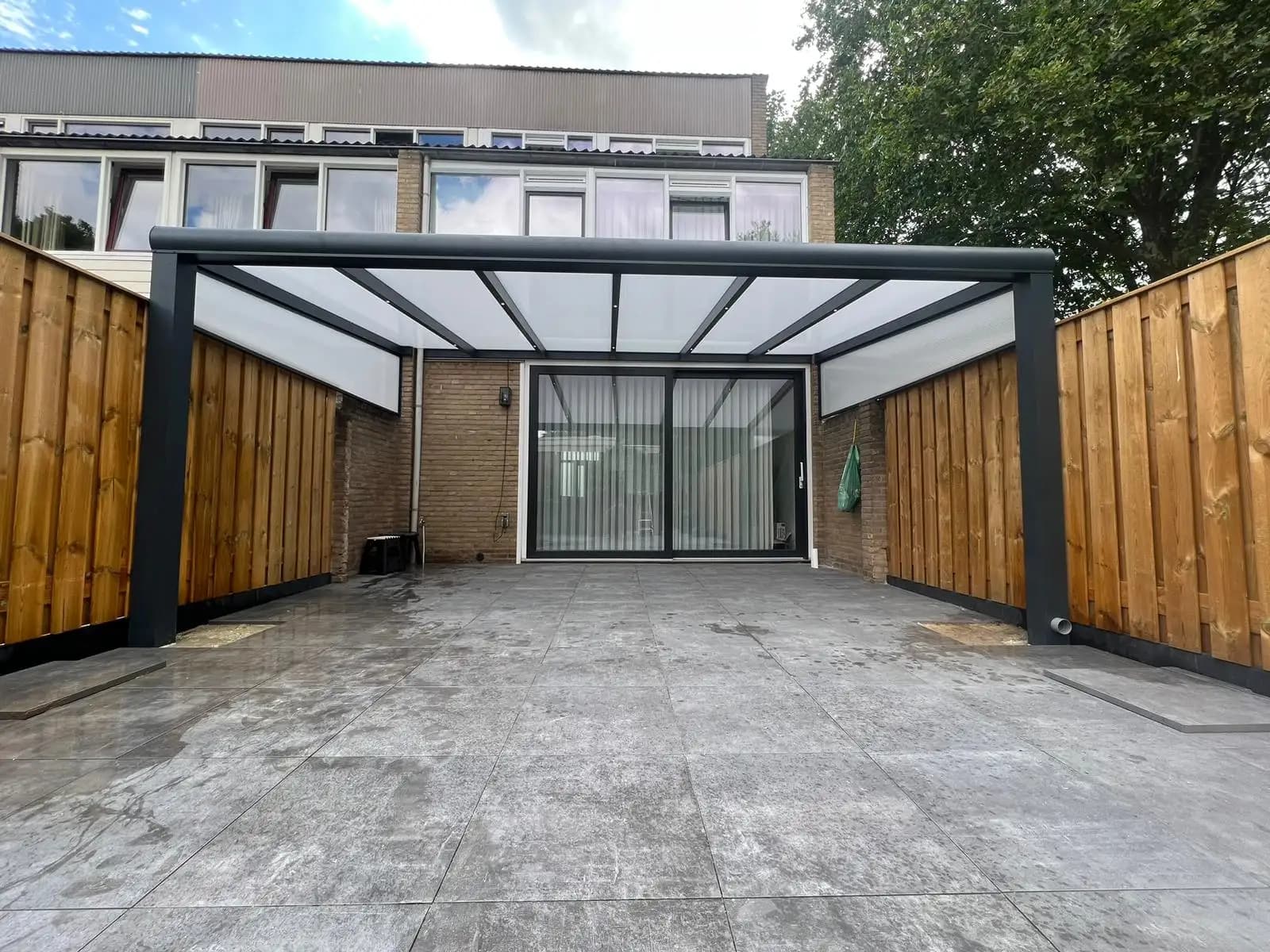
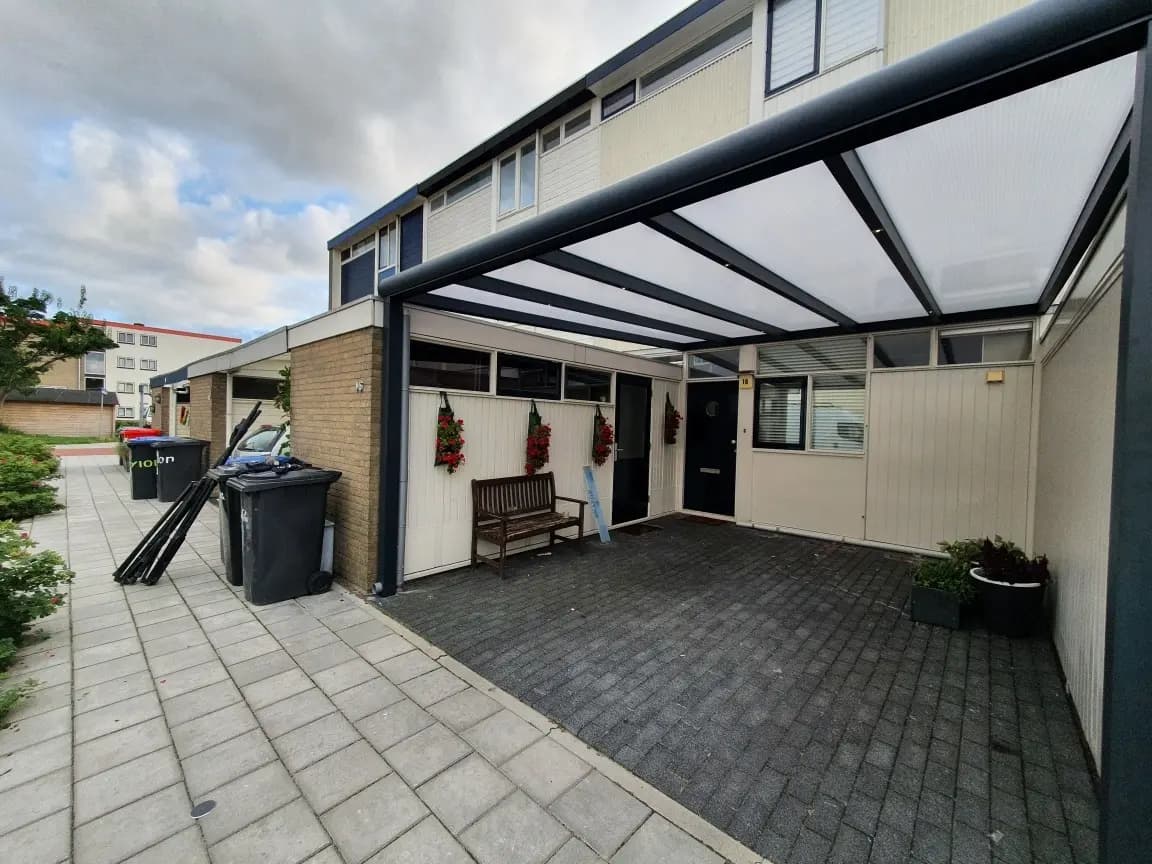
Polycarbonate is an impact-resistant plastic. As a roof sheet it is usually a hollow, multi-wall panel with channels in it, which make it light and generally give better insulation. It is often available clear or opal (milky white), which scatters the light.
Glass
Roofs usually use safety glass, often laminated: two panes of glass with a film between them, so the pieces stay put if it breaks. Glass can be clear, but also tinted or solar-control, for less glare and heat.
Which versions are possible for your veranda, we will discuss with you.
The differences at a glance
There is no best roof, only the roof that suits your garden and the way you use it best. These are the differences you will notice in practice. They are tendencies: the version and the situation always play a part.
| What matters | Polycarbonate | Glass |
|---|---|---|
| Light | Plenty of light, soft and diffused | The most light, a clear view of the sky |
| Heat in summer | Can get warm; opal softens it | Can get warm; tinted or solar-control glass softens it |
| Insulation | Usually better | Usually less |
| Noise in rain | Usually more audible | Usually quieter |
| Weight and structure | Light | Heavy, needs a sturdy structure |
| Price level | Usually more affordable | Usually more expensive |
| Upkeep | Easy, a little more prone to scratches | Easy, usually more scratch-resistant |
Light and heat
The more light a roof lets through, the more solar heat comes with it. Clear glass and clear polycarbonate give the brightest veranda, but on a sunny afternoon also the warmest. Opal polycarbonate and tinted or solar-control glass soften sun and heat, at the cost of some of the light.
Think about the room behind the veranda too. A darker roof against the wall makes that room noticeably less bright. If you want to keep the daylight there, a lighter version is usually the better choice.
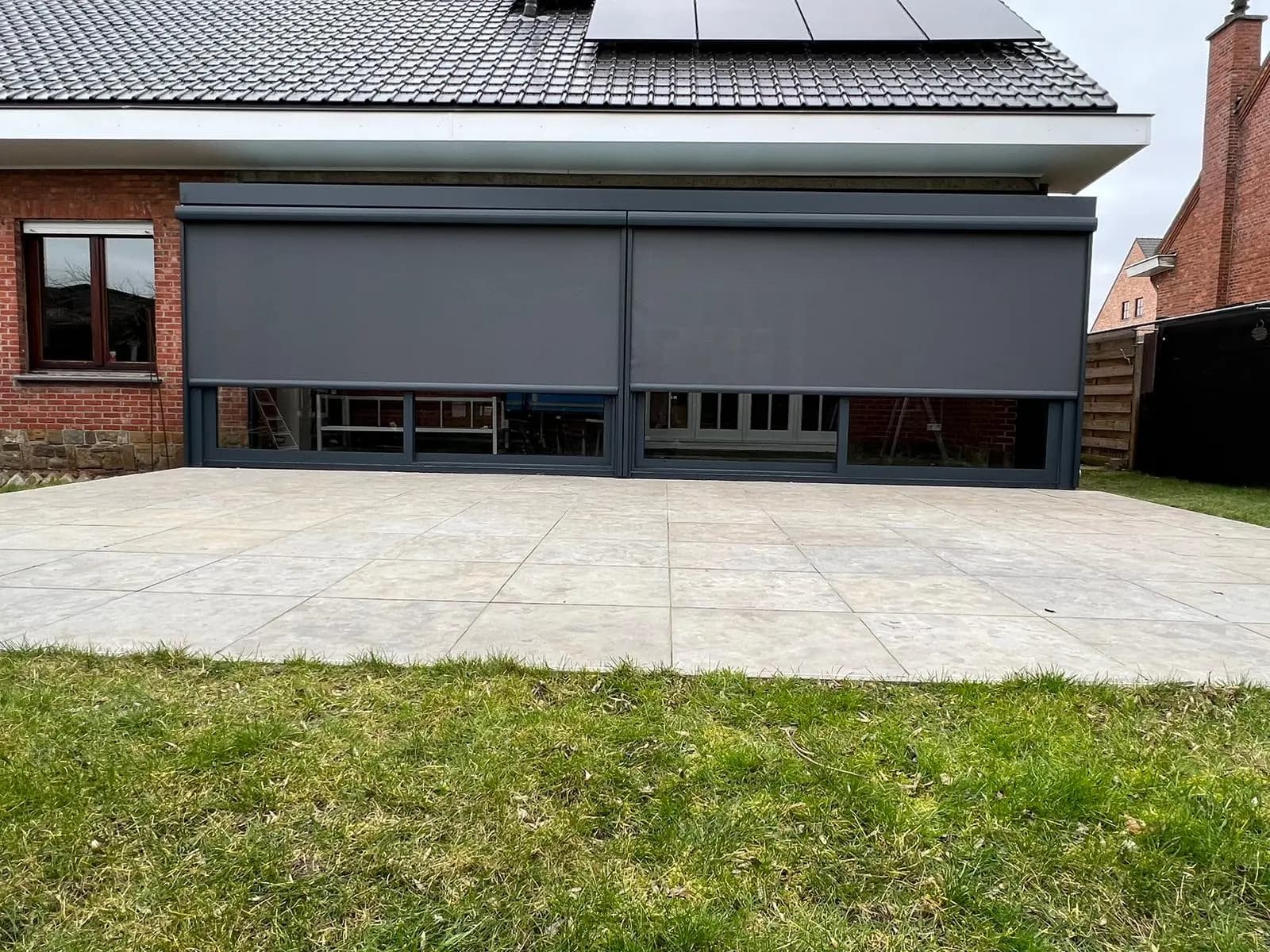
Still want clear glass on a sunny wall? Sun shading above or in front of the veranda keeps out part of the heat, and stays rolled up when you want the sun.
Insulation and noise
Thanks to its air channels, polycarbonate usually insulates better than a single pane of glass: in winter less heat is lost through the roof and less condensation forms. A glass roof generally feels colder in the cold months.
In rain it is the other way round. Polycarbonate is light and the thin walls vibrate along, so you clearly hear a shower. Glass is heavier and sounds duller and calmer. If you like sitting under the veranda when it rains, or it adjoins a bedroom, that can tip the balance towards glass.
Weight and structure
Glass is many times heavier than polycarbonate. The frame, profiles and posts have to be designed for it, and fitting glass is heavier work.
That is why you cannot simply swap a polycarbonate roof for glass later. First it has to be certain that the structure can carry the weight. If you want to keep that option open, say so with your request.
For snow and wind, the structure has to suit the place where the veranda stands. The build-up of roof and frame counts at least as much there as the material of the roof sheet.
Price and upkeep
Polycarbonate is usually more affordable than glass. The material itself is cheaper, and because it is lighter the structure is usually lighter too. How big the difference is depends on the dimensions and on your choices. You will see it in the quote.
Both roofs are easy to keep clean with water, a soft brush or cloth and a mild cleaning product. Glass is generally more scratch-resistant. Polycarbonate scratches more easily, so avoid abrasive products and hard sponges.
GardenGate gives a 5-year warranty on polycarbonate roof panels.
How to choose
Start with the position of your garden and what you want to do under the veranda. These rules of thumb will take you a good way.
| Position of your garden | What usually works well |
|---|---|
| South or south-west | A lot of sun: a softened version (opal polycarbonate, tinted or solar-control glass), possibly with sun shading |
| West | Low evening sun that can dazzle: soften it, or add sun shading at the side |
| East | Mild morning sun: a clear version keeps the veranda bright |
| North | Little direct sun: clear keeps the space as bright as possible |
- If you sit there a lot when it rains, or want peace and quiet: lean towards glass.
- If you want an affordable, light solution: lean towards polycarbonate.
- If you want the widest view of the sky: lean towards clear glass.
Describe your garden
Want to request a quote? Then tell us as much as you can about your garden, for example:
- which side of the house the veranda goes on and how much sun it gets;
- what you use the veranda for, and at which times of day;
- what you hear or see: a bedroom above or behind the veranda, neighbours, trees;
- whether you want to soften the sun, and whether sun shading or tinted walls are an idea;
- your wishes and, if you like, your budget in broad terms.
It makes our advice and the price indication much sharper. We always get in touch to talk through all your wishes and the details. Which versions are possible for your situation, you will hear from us then.
Frequently asked questions
Briefly answered
Which roof stays cooler in summer?
Neither is cool by itself: a roof that lets in a lot of light lets in heat too. A softened version (opal polycarbonate, tinted or solar-control glass) and sun shading above or in front of the veranda help most. Which combination suits your garden depends on its position.
Do you really hear rain on polycarbonate?
Usually yes, more clearly than on glass. Polycarbonate is light and the thin walls vibrate along. Glass sounds dull and calm. If you often sit there when it rains, or the veranda adjoins a bedroom, that counts.
Can I switch from polycarbonate to glass later?
Not simply. Glass is much heavier, so the structure has to be designed for it. If you want to keep that option open, say so with your request; we will then discuss what it means for the structure.
How much more does glass cost than polycarbonate?
Glass is generally more expensive, partly because of the weight and the sturdier structure. How big the difference is depends on the dimensions and your choices; you will see it in the quote. We do not quote a standard amount here.
Can the roof be glass and the gable infill polycarbonate?
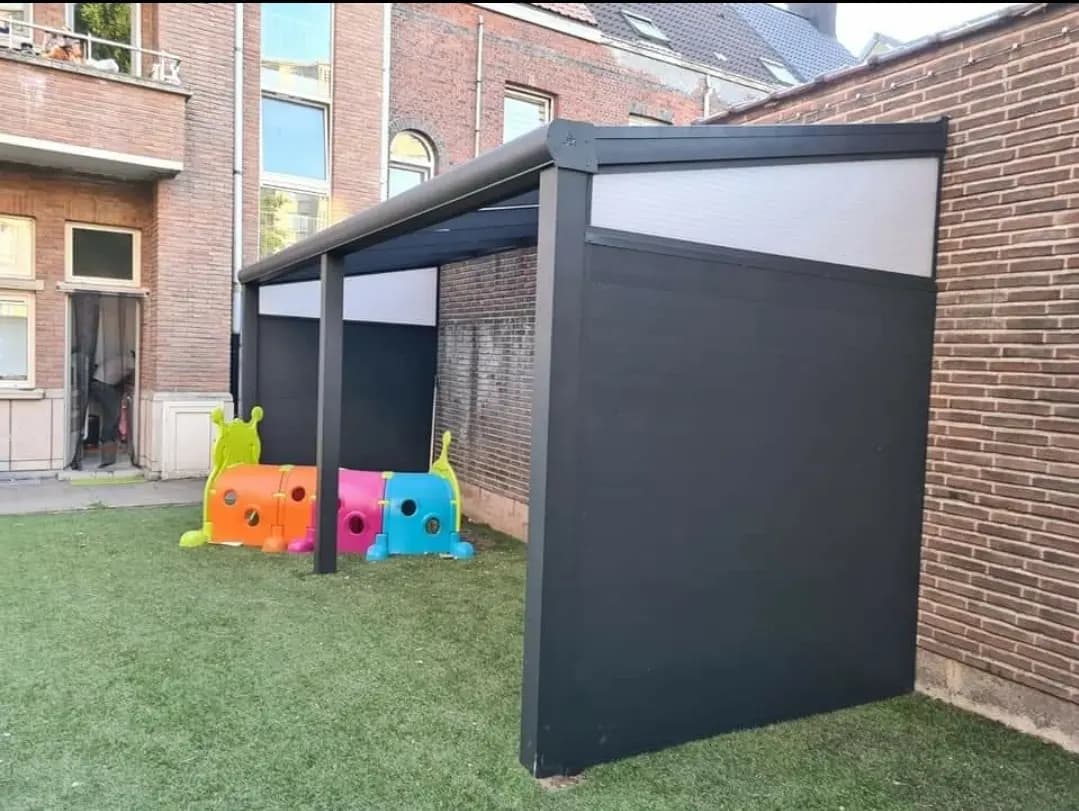
With your request you choose the roof and the gable infill, the triangular panel beside the roof, separately: glass, polycarbonate or none. Which combination works well in your situation, we will discuss with you.
What warranty do I get on the roof?
GardenGate gives a 5-year warranty on polycarbonate roof panels. What applies to other parts is stated in your quote.
About these products